Category Archives: book review

The Taming of the Shrew by William Shakespeare

I wanted to read William Shakespeare’s the Taming of the Shrew for a few reasons. Most importantly, it was to see if I could still cope with the text and thus prove my degree in English Lit/Drama is still in here somewhere. But I also chose it for its famous sexism/misogyny, to see how it came across to my middle-aged feminist eyes. I knew the plot, so I’d have no trouble understanding what was going on (or so I thought). Moreover, I have seen two live productions of the play and one of them made an indelible impression on me. It was in 1987 at the Stratford Festival (Ontario) with Goldie Semple as Kate and Colm Feore as Petruchio. When reading the play this week , I could still remember some of their interplay and reactions. It was a truly magnificent production. (I’ve also seen a filmed version with John Cleese of all people, and he was the best thing in it and the one who made the language most accessible.)

For the uninitiated, and how is that even possible, The Taming of the Shrew is the story of Baptista, a man with 2 daughters, both alike in dignity, but dissimilar in temperament, in fair Padua where we lay our scene. Katherina/Kate is the eldest, difficult and irascible; his youngest, Bianca, is a fair and delicate creature beloved by all the men she meets. Baptista is unwilling to let Bianca marry until Kate is herself settled. The ensuing hijinks focus around each sister: Bianca has a number of suitors performing a number of ruses to secure her hand. Kate is “taken on” by Petruchio as a challenge, and a wife, to allow Bianca’s suitors a chance gain their own ends. Petruchio proceeds to comically break Kate’s spirit rendering her a sweet, compliant, and therefore “happy”, wife.

As I started to read, I recalled, possibly incorrectly, that the modern aprroach to the play is to have Kate and Petruchio fall in love at first sight to lessen the sting of the abuse she endures and the obedient wife tropes she eventually spouts. If they are evenly-matched, and Petruchio’s efforts are ultimately well-intentioned to bypass the protective wall Kate has built around herself, it somehow makes it less awful when she is deprived of sleep, and food, and rational treatment. He is capricious in his behaviour to everyone he meets, and I don’t know it that helps exactly, but at least Petruchio is consistent. And Kate is a bit of a pill. They are indeed evenly-matched, if romance is a cage match, and in this case it is.

There was an irrelevant framing device that can be either included or omitted from the play. Its only use to me was as a starting point to accustom myself to the language, a task that would have been simpler, if fewer of the names were Somethingio. As I forged ahead, I knew I was going to be okay when I laughed out loud at this line –

PETRUCHIO: And you, good sir! Pray, have you not a daughter
Call’d Katherina, fair and virtuous?
BAPTISTA: I have a daughter, sir, call’d Katherina.

Some of the idiomatic language was lost on me, but I don’t think it undercut the overall effect of the play and, should I continue reading Shakespeare, I suspect that long dormant parts of my vocabulary will rally to the fore. Being a Shakespeare comedy (and from what I remember based on the story structures of ancient Roman plays which were later also used by P.G. Wodehouse) everyone is pretending to be someone else and trading places. The Bianca plot was actually the most challenging with all of those Somethingios to-ing, and fro-ing and woo-ing simultaneously. Had I been watching the play, which is, after all, the point, it would have been a lot easier to follow.

The Bridgertons Series: The Duke and I by Julia Quinn

Let’s start with a visual, shall we? After all, it is a romance novel and book cover art can be so dull.

The Duke and I is the first novel in Julia Quinn’s Bridgerton family series. It features Daphne Bridgerton, a young woman in her second season “out”, and Simon, Duke of Hastings, the erstwhile best friend of her brother, Anthony. Simon has been away for 6 years waiting for his father, a complete bastard, to die. He has returned to London to inherit his title and in doing so both accept and reject, as far as he is able, his role in life. Simon attends a soiree at the home of (recurring character) Lady Danbury and runs into Daphne as she tries to quash her only suitor’s advances. Daphne has not had luck with beaux. Men only see her as a friend because, rather than a fashionable flibbertigibbet, she is lovely, grounded, and kind. Now, who would want that? Guess. Simon is attracted to her instantly, but realising she is his best friend’s sister, errs on the side of propriety and backs off. The Fates and Plot Points intervene and the two of them settle into a friendship based on London society’s perception of their affection for each other: He escorts her to balls to deflect the unwanted attentions of marriage-minded women and to simultaneously make Daphne seem more appealing to suitable men by association with him. It works, but of course they fall in love, and, of course, there are obstacles, specifically Simon’s reluctance to marry and carry on his family name. The moment he gives in to his feelings for Daphne, they are caught in a compromising situation and the dance toward the happy ending is set in motion as, of course, they must marry…

While it would seem that I read the best of the Bridgerton, series first, I really enjoyed The Duke and I. Julia Quinn is especially good at the banter I look for in these books and she also manages to create a sense of anticipation in a story with a pre-determined ending. That is no small feat. This novel also had the added advantage of characters having genuine conversations. It doesn’t seem like a lot to ask for, but often romance novel interactions consist of projecting personality factoids at each other and waiting to kiss. Quinn creates believable people; they are beautiful, rich and charming, but at least they seem real enough to let you care about them. Lastly, Quinn is by far the best author I have found for balancing the love and sex elements.

A Bridgerton series summary is included in my review of Gregory’s book On the Way to the Wedding.

Reviewer’s Note:

I’ve read 20 historical romance novels in the past month and I have to ask –

What is with all of the French kissing? As God as my witness, last weekend, I read a kissing description in which the hero licked the roof of the heroine’s mouth. Is that even possible? Was he Gene Simmons? Is that an image you want in your head reading one of these books? Let me answer that for you: No, it is not. Do you remember when you discovered kissing, or, better still, kissed someone you were so smitten with that it was heady, electric, devastatingly swoony, and so many other delightful things? Remember those kisses? These books need more of that. In romance novels, the men are experienced, but the woman are certainly unaccustomed to being kissed. So imagine yourself as an inexperienced and, no doubt, uninformed young woman. You are being kissed by this man, this beautiful man. How much tongue is involved? How quickly? Is he flossing your uvula? These writers use tongue calisthenics to show the intensity of the leads’ connection, but don’t necessarily capture that magical kiss feeling. The racier the novel, the more violent, thrusting (in a “primitive rhythm”), sweeping, possessive, and getting into every nook and cranny of her mouth his tongue gets. There must be a way to describe kissing that is romantic, passionate and erotic, and doesn’t slide into inept erotica.

A summary of Julia Quinn’s catalogue can be found here. Links to my other reviews can be found on my complete reading list of books sorted by author or Author Commentary & The Tallies Shameful.

Tempt Me at Twilight by Lisa Kleypas

The Dowager Julien likes to read Georgette Heyer books upon occasion, and I recently pointed out to her that doing so did not mean she lost all intellectual credibility: Just because you enjoy kissing books does not mean that you forget what The Anschluss was, or have to go back to the remedial class; however, IF IT DID, I am now so knee deep in historical romance novels that my university degree would be revoked. “My name’s Prolixity and I used to want to write a Master’s thesis on e.e. cummings and the Metaphysical poets, but now I read books with characters named Sebastian, Lord St. Vincent”.

I listed the books I’ve read so far before, but I forgot a couple. There have been rather a lot.

Come Love a Stranger – Kathleen Woodiwiss – Reformed Rake: VERY attractive reformed rake, a lot of pages of subterfuge and silliness to skip over.
The Duchess – Jude Deveraux – I skimmed this one. Deveraux is a Deverdon’t.

Really? Are you still reading after that terrible joke? I am unworthy of such beneficence.

Since last week, I have read:

The Devil in Winter – Lisa Kleypas – Reformed Rake, Self-Sacrificing Lamb – I read it Friday night. My first Kleypas, but not my last, not even my last this past weekend.
The Viscount Who Loved Me – Julia Quinn – Reformed Rake AND Bridgerton Brother #1 (Anthony) – I read it yesterday. The Bridgerton books make me giggle and smirk. A lot. Occasionally, I hoot. I am expecting to receive The Duke and I by Julia Quinn in the mail today – Reformed Rake and Bridgerton Sister #1/sibling #4 (Daphne).

I went to K-Mart and purchased Lisa Kleypas’ Tempt Me at Twilight on Saturday morning. I went specifically to buy this book. I had seen it a couple of days before, but did not like the random passage I read. Later, I was reading different random passages on Amazon and came across a paragraph so appealing that I wanted the whole book. Now, go back and look at that title. Just look at it. Could it be any cheesier? Let me answer that for you: No, it could not. Mercifully, the book does not also have a salacious cover, but it does have a ridiculous frontispiece involving soap opera people posing in pseudo-19th century dishabille and, as is always the case in these books, bearing absolutely no physical resemblance to the characters. I ripped that sucker out of the book as fast as possible. The title is embarrassing enough; I don’t need to give Mr. Julien any more ammunition than necessary.

Tempt Me at Twilight is the story of Harry Rutledge and Poppy Hathaway. She is the rich daughter of an eccentric family, but, then, aren’t we all? Poppy has been “out” in society for three years and has not found a husband despite being beautiful and well-educated. Her problem, it seems, is an unconventional family, and her inability to dissemble about her education and intelligence. I like this Lisa Kleypas person already. Harry is the American owner of a London hotel that hosts families of the ton during the London season as they look for a mate they, hopefully, feel a sincere tendre for. If you have read any Regency romance novels, all of those words will make sense to you. Furthering my appreciation for Ms. Kleypas, Harry is tall, dark, handsome, and slightly forbidding. All excellent qualities. When the men are fair-haired, I stick my fingers in my eyes and sing “la, la, la I can’t hear you”, and then I scream and hit myself in castigation… Harry is also brilliant and a self-made man which adds a nice touch. Poppy and Harry meet cute and he sees in her everything good and wonderful in the world, so he ruins her reputation (in a chaste 19th century way) to make sure they end up married, but not really together, after which highly-predictable hijinks ensue. Being a Reformed Rake and having the usual “loveless child” back story, it takes him a while, practically the whole book, amazingly enough, to be able to voice his love for her, although he is clearly besotted which he shows in nice (gentleness, love, patience) and not so nice (jealousy, being overbearing) ways. I do so adore smoldering, besotted rakes. As is often the case, and not my taste, there was some silly sub-plotting, but I guess some people enjoy a bit of intrigue in their romance novels. I’m basically ONLY about the man/woman stuff, so if they’re not interacting, I’m not interested. That’s what skipping pages is for. I do that with whatever romance novel I’m reading.

Lisa Kleypas’ writing is very good for the genre. She doesn’t have the wit of Julia Quinn, but that is not a bad thing, only different. Kleypas is a bit racier, so it’s really just a question of what you are looking for. I cared about the characters, I loved Poppy, and wanted a Harry Rutledge of my own, and I think that is all that matters. Sometimes you want to giggle and beam (Quinn), and sometimes you want a charming, misguided, besotted rake, in which case Kleypas is a good choice.

Addenda:

Prolixity really is an apt pseudonym, isn’t it? I spend almost as long writing these reviews as I do reading the books.

These women spend a lot of time with their hair down. It’s not the historical inaccuracy I object to. It’s the fact that their hair is very long and it never gets caught under anyone or in the way. My hair goes about a 1/4 to a 1/3 of the way down my back and it’s forever getting caught under things, usually other parts of me.

One of the leads, usually the man, always has a Sardonic Eyebrow of Seduction which they lift as a wry gesture. I would love to be able to do that! Wry is one of my favourite things in the whole wide world. It’s why William Powell is my secret husband. The Dowager Julien has a Baleful Eyebrow of Doom that was deployed almost exclusively as a threat when we were young. Sadly, I did not inherit her skill.

Thank you to everyone who made recommendations. Loretta Chase is next in line.

A complete summary of Lisa Kleypas’s catalogue, with recommendations, can be found here.

Links to my other reviews can be found on my complete reading list of books sorted by author or Author Commentary & The Tallies Shameful.


The Bridgertons Series: An Offer From a Gentleman by Julia Quinn

As my ignominious devouring of romance novels continues and I present another one for review, I must start by making sure everyone bothering to read this is on the same page: There are two basic types of heroes in these books a) Laconic Warrior (usually a Laird or Cowboy) and b) Reformed Rakes Make the Best Husbands (titled and/or rich charming rake) as detailed in my first review. I prefer the Rakes by a mile. The books below are what I have read recently; I’m not counting them in my CBR total, but this is what I have been up (sunk) to:

Ransom – Julie Garwood – Laconic Warrior – predictable Garwood (which is not a bad thing, she’s reliable)
Honour’s Splendour – Julie Garwood – Laconic Warrior predictable Garwood
Prince Charming – Julie Garwood – Laconic Warrior, sub par Garwood
The Bride – Julie Garwood – Laconic Warrior – predictable Garwood
Once and Always – Judith McNaught – Reformed Rakes Make the Best Husbands. Charming Cynical Bastard. Gorgeous Bastard. Asshole. Rapist.
Temptation and Surrender – Stephanie Laurens – Surprisingly graphic, thisclosetosmut, occasionally hot, but not romantic
An Ideal Bride – Stephanie Laurens – Surprisingly graphic: 20 page sex scenes, really? Nervous virgins do things like that? Really?
The Heir – Joanna Lindsey – Tepid, underwritten, and dull.

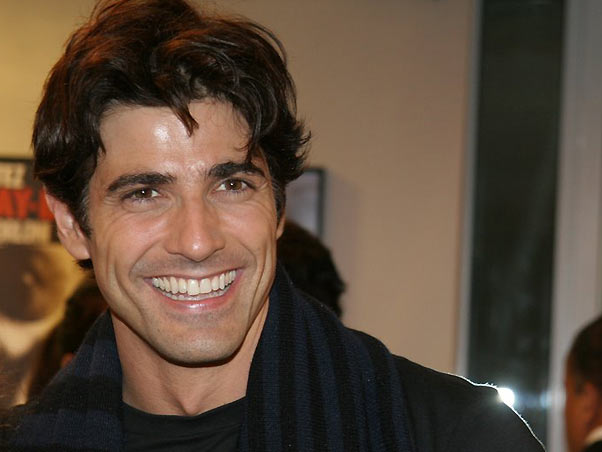
Oh, but then Amazon helped me discover Julia Quinn. She knows her way around a Reformed Rake, although, truthfully, they are more experienced charmers than genuinely rakish. I so don’t care. As is common with romance writers, Quinn created a series of books built around a family group, in this case the 8 Bridgerton children. Each is given their own book and, according to Amazon, the quality diminishes as one progresses through them. Last Friday, I picked up An Offer from a Gentleman (Bridgerton Family #3) about Benedict, and Romancing Mr. Bridgerton (Bridgerton Family #4) featuring Colin. I’d finished both of them by Saturday night. All of the family are described as having chestnut hair and wide mouths, and, although their eye colour varies, I choose to picture the men as all looking like a variation of this (but English and during the Regency):

I’ll give you a moment to collect yourself.

Now THESE are romance novels. Not the overwrought conflagration of sex scenes of Stephanie Laurens wherein everyone is on fire and ends up in the stars, or the tepid high school insufficiencies of Joanna Lindsey. Julia Quinn gets it right: There are no dramatic subplots just to fill pages; the writing is funny; the relationships are romantic; and there is playful banter. Oh, how I love the banter. The men are extremely attractive, and the women, well, the women are of the Wallflower/Why Didn’t Anyone Notice Me Sooner? variety. As a woman who never garnered much male attention, I relate to this type quite well because, in the real world, people don’t actually find it enchanting when you talk like a Gilmore Girl by way of Katharine Hepburn. Anyway, in An Offer from a Gentleman , Benedict (son #2) first meets Sophie Beckett (abused bastard daughter of the late Earl of Penwood) at a masked ball her stepmother has forbidden her to attend. She has to leave quickly and he doesn’t even find out her name.  Left with only the mystery woman’s glove, Benedict spends months looking for, and dreaming of, the woman he met. Mercifully, the description of those months lasts just a couple of pages. Meanwhile, Sophie is a little busier as she is cast out of her home and must find work as a servant. Their paths cross again two years later when Benedict saves her from being attacked and then, conveniently, falls ill and she stays with him. All of these books contain these contrivances and, again, I so don’t care. They fall for each other all over again, but she will not reveal they have met before, and he cannot marry a woman of her station/origins. In between the meeting and the marrying, the reader gets delightful interplay between the characters, genuinely romantic descriptions of how they feel about one another, and some well-written love scenes (although at least one more would have been nice). This book was exactly what I was looking for. I may even have taken a reading break to run into the living room to yell at Mr. Julien, “OH MY GOD! I LOVE THIS BOOK!”

I have ordered Julia Quinn’s Bridgerton books 1 and 2 (Daphne, then Anthony) used from Amazon. If I’m going to read this stuff, the least I can do is only pay 1 cent, plus shipping, for it. Next up after Quinn is Lisa Kleypas’ The Devil in Winter. I’ve decided not to review any more of these books, but I can tell you that the Devil excerpts I’ve read on Amazon held the promise a genuine rakehell at last. (2019 Update: HA! HA! HA!)

A summary of Julia Quinn’s catalogue can be found here. Links to my other reviews can be found on my complete reading list of books sorted by author or Author Commentary & The Tallies Shameful.


Sleepwalk with Me and Other Painfully True Stories by Mike Birbiglia

Who can resist a writer who describes falling in love as someone recognizing your “special secret skill”? Isn’t that lovely? It’s one of the most charming descriptions of love I’ve ever heard.

I purchased this book for my husband for Christmas after we watched one of Birbiglia’s specials. My sweetie hasn’t read it, but I found it extremely enjoyable and I felt it benefitted greatly from being able to hear Birbiglia’s wry and carefully monotone delivery in my head. He’s not exactly a comedian, but rather a raconteur of wonderfully-funny stories. There are not rimshots, just the ridiculous adventure he is relating and making observations on.

The book weaves stories from his life together and builds to a final section which I strongly suspect was drawn almost in its entirety from his lauded one man show Sleepwalk With Me. That is in no way a criticism.

The writing is of a quality typical for this kind of book. Above average, clever, but not earth shaking; in fact, that is my opinion of the book. It bobbed along nicely but wasn’t really entertaining enough for a huge recommendation. Buy it for times when you need something to read in 10 minute intervals.

Almost Heaven by Judith McNaught

When last we met, I had just read a book (not to be confused with a work of literature) featuring an iron-thewed Highland Laird and his lady love, a Victim of Circumstance. Now, as I go through this phase, I’m all for a man can bench press Stonehenge and glower at me lovingly; however, while the whole Laird thing will do in a pinch, the Highlands are cold and damp, and I’d be constantly chilled to the bone, no matter how closely the hero “pulled me to his warmth”. Plus wool makes me itchy. What I need is a Reformed Rake to Make the Best Husband. He’s the charming, cynical bastard at the heart of most historical romance novels. It makes for better repartee and what’s the point of reading, if the man in question isn’t intelligent, magnetic and devastatingly seductive? Let me answer that for you: There is no point at all. Judith McNaught knows her way around a charming bastard: They require a lot of forgiveness and she makes sure he is worth it. The gentleman in question is so entirely delicious, and such a magnificent combination of everything swoonworthy, that I’d forgive him 17 times too. Almost Heaven is silly, the writing is overwrought yet strangely repetitive, and, oh my God, I LOVED EVERY SINGLE PAGE, even the ones I skipped to get back to the love story.

The Sacrificial Lamb of Almost Heaven, Elizabeth Cameron, is a Countess who will lose her beloved ancestral home should she marry against her vile and greedy uncle’s wishes. Because romance novel heroines are basically PG13 Disney princesses, she also has a worthless brother complicating things, and a household staff that dotes on her every move. Elizabeth is quite young, but I ignore that part. If I can ignore all the other strains on credulity, I can certainly pretend she is 5 years older. She is, of course, beautiful, but Elizabeth is also educated, independent and proud. Pride is considered a virtue in these books. I assume it’s their tenuous connection to the ultimate romance novel Pride and Prejudice. There are worse places to start. It also helps delay the denouement because everyone has to get over themselves for the happy ending to be achieved.

When the novel opens, Elizabeth is in disgrace because on the cusp on announcing her engagement to an appropriate young man, she met gambler Ian Thornton at a house party. He is gorgeous, charming, and, really, I can’t emphasize this enough, just smokin’ hot. (He is also rumoured to be the illegitimate grandson of the wealthy Duke of Stanhope. Guess how that turns out.) In flashback, they meet, fall in love instantly, he proposes, there is a misunderstanding owing to her naivety and his cynical bastardism, and her world implodes. Two years later (page 150 or so), she comes back into his life, they are still irresistibly drawn to each other, they establish a fragile peace, she has to leave, he FINALLY realises it’s ALL his fault, humbles himself, repairs her reputation, marries her, and there’s, like, two chapters of wedded bliss. Then it all goes to hell again because secrets are bad, jumping to conclusions is unfair, and sometimes people are idiots. But don’t worry, you already know how it turns out.

Links to my other reviews can be found on my complete reading list of books sorted by author or Author Commentary & The Tallies Shameful.

Saving Grace by Julie Garwood

About a week ago, I woke up and all I wanted to do was read a romance novel. I am not proud, but I am trying to own my shame. I blasted through the two books I had in the guest room closet and have moved on to both the library and the bookstore for more. If you have never read “historical romance fiction”, I can fill you in:

All the lead characters exist on a kind of mix’n’match continuum as follows:

The Men

A. Reformed Rakes Make the Best Husbands (gorgeous cynical bastard)
B. Laconic Warrior (gorgeous gruff protector)
C. Ordinary Guy (If you are looking for him, go find LaVyrle Spencer)

There’s also a whole cowboy thing, but the Old West is too dusty.

The Reformed Rake will have lean muscle mass and feline grace. He is a charming companion and an excellent dancer. His cynical bastardism may be a result of a feminine betrayal in his back story.

The Laconic Warrior will be heavily-muscled and rip doors of their hinges: Giant oak doors with giant iron hinges. There is an excellent chance he will also be a Highland Laird. He will sleep out of doors and bathe in the lake, even in the dead of winter. He will be intimidating and often frighten women, but not the heroine, no, she will take one look and see the handsome man no one else has been able to see underneath all the tartan and scowling.

These men are overwhelmed by the protective impulse they feel for the enchanting bit of fluff they’ve just met. These are Men of Action and are not distracted by such trifles as feelings.

The following elements will usually appear in some form:

1. Clenched jaw with visible muscle twitch to show anger
2. Clenched teeth as he clings to restraint in the face of the lust she has innocently aroused in him, and he is holding back lest he overwhelm or harm the woman with the strength of his passion
3. No matter where he lives, he will be tanned from head to toe. This bronzed glow will be surprising, and pleasing, to the heroine.

The Women

A. Victim of Circumstance (beautiful pawn)
B. Wallflower (otherwise ignored fabulous woman)

They are slim, but curvy goddesses as a rule. They always have more book learnin’ than is historically accurate, but I appreciate this token feminism. The Victim of Circumstance is either rich and exploited, or poor and exploited. The Wallflowers just need someone to finally notice them.

The following elements will appear in some form:

1. Cascading hair
2. A naturally tiny waist not really requiring a corset.
3. She holds herself like a queen, or
4. She is accident prone.
5. The Reformed Rake will require a lot of forgiveness.
6. The Laconic Warrior will require her to recognize he loves her before he is able to give in to this vulnerability and tell her.

Things You Have to Overlook

Blatantly anachronistic elements mostly with regard to social and sexual mores. If I wanted historical accuracy, I’d read Jane Austen. Incidentally, the things the hero and heroine do during their intimate moments has gotten much more adventurous since I started reading these books in the 1980s. I find it distracting. I blame the mainstreaming of porn.

No one can get out of that period clothing so quickly. Just once, I wish the heroine would be inwardly cursing all the damn layers that are taking so long to remove.

The age difference of at least 10 years, specifically the youth of the women.

Consistent Narrative Elements

Blazes of sensuality
Synonyms for heat
Oblique references to male body parts
Even more oblique references to female body parts
There is a lot of arching
Verbal sparring
Losing control
Sighing
Someone will be “vexed”
Something will be “sinewed”
Many things will be sensual
Being a pirate is cool

I think you should be up to speed now, but before I start, I must tell you that the book included a bonus chapter from another of the author’s novels. It was set in present day Boston and our hero (read: Kennedy) meets his prospective partner at a charity event when he THROWS UP ALL OVER HER as he has appendicitis. Then, because she is a doctor visiting from out-of-town, she performs the appendectomy. That’s right: she performs a random minor surgery at a local hospital at which she has no privileges. This is why I stick to historical romance novels.

Interjection December 2013: This was a pretty good summary of the tropes of the 1990s, but things have changed since then. The hero and heroine types have not changed but the women tend to be older and more experienced now.

And now to the business at hand:

God’s truth, I can’t even remember the heroine’s name. Let’s see if it comes back to me. The setting is England in 1206. Something exciting has happened with King John and his barons. Johana (!) is recently widowed after years of torment at the hands of her verbally and physically abusive husband, and the family priest. Childless despite her years of marriage (That’s right! She’s not a virgin and she never knew it could be like this), she is a valuable pawn as she has land holdings in Scotland that have been in dispute. Having avoided remarriage as long as she can, she ventures with her loving brother, Nicholas, to make a political match by marrying Laird Gabriel MacBain, a gruff and gorgeous warrior. By marrying her, he gains full title to his clan lands, and she is safely removed from the proximity of those who would exploit her for her wealth (I know). Although he now has the land, he is cash poor and that’s where the whisky subplot comes in. There is also some stuff about clan infighting and which plaid she is wearing.

As Johana settles into her new life with the imposing Laird, his love and gentleness, honestly, he really is a teddy bear, help her to heal and find her own identity and role as his partner. Along the way, she kills a group of wolves with her bow and arrow, she learns golf, and she gets over her fear of his wolf hound. I have to go back to the wolves for a second. She kills 4 wolves and her husband sets the bodies on fire rather than making a blanket out of the wolf pelts. I’d want a wolf pelt blanket myself.

I chose this book because I was familiar with the writer. It’s dangerous to take a chance on these novels because they often used to include an assault in which the heroine’s “body betrays her” and she gives in and enjoys it, OR, or the hero starts raping her, realises she is a virgin and then, AND ONLY THEN, feels guilty for the assault. You can see how I’d want to avoid that. The entire genre is very repetitious in plotting (obviously) and Garwood loves a nice, obvious subplot involving court intrigue. Generally, I skip ahead to get back to the romance. It’s really what I’m looking for and she does a good job with it. I’m actually not a big fan of the Laird/Highlander genre. I prefer the cynical bastards; they are generally witty, charming and fiercely intelligent, and I like that in a sexually-objectified man.

I’ve already started reading my next book Almost Heaven by Judith McNaught. I loved it when I was 20 and expect I will love it again now. It features a gambling roué named Ian Thornton, rumoured to be the illegitimate grandson of the Duke of Stanhope.

Links to my other reviews can be found on my complete reading list of books sorted by author or Author Commentary & The Tallies Shameful.

Freedom by Jonathan Franzen

There is great pleasure in reading genuinely well-written prose and Jonathan Franzen is a writer who delivers exactly that. This is not a self-reflexive, ironic or meta book: Freedom is a good old-fashioned novel which takes its time with character and story. It is a tome. Franzen uses his undeniable prowess to create a rich portrait of his protagonists and their life. As in The Corrections, he creates an entire family’s world and the novels are linked thematically by the aphorism “the only normal people are the ones you don’t know very well”, self-destructive characters, and the fact that no good deed goes unpunished and no altruism is unsullied. As in The Corrections the result is extremely well-crafted, but somehow not enough.

Freedom examines the Berglund family: Walter, the father, is a good man, well-intentioned and frustrated on several levels. Patty is a mother of two who had the financial luxury to stay at home and try to create the family she herself had wanted. She is lost, also frustrated, and ignored by those whose attention she wants, and incapable of giving her full attention to those who crave it. They have a daughter, Jessica, who figures in the story peripherally (and as the ignored sibling that all literary families seem to have). Lastly is their son, and Patty’s golden boy, Joey. He is the product of too much love and indulgence. The family comes together and falls apart (but not necessarily in that order) over the course of the story. It is an examination of their middle class mid-western lives that reaches a kind of crescendo and allows them to move forward. As the story ranges through their lifetimes, Franzen devotes time to each of his major characters and gives each of them a kind of 360 degree portrait. I’m willing to give them a couple of short paragraphs.

Patty is fleshed out in an extended “autobiographical” section in the book. This allows her to be the most revelatory and detailed, but in the absence of the omniscient narrator, also lets Franzen create a full sense of her perspective, but not necessarily a realistic view of her world. Patty is sympathetic, but not likeable, and I strongly suspect that Franzen didn’t like her much either.

Walter chooses to do good works, but must uncomfortably attempt to straddle the line between his desire to help and the extent to which those with power will allow you to do so. He is easily the most sympathetic character.

Joey is an incomplete narcissist despite his own best efforts. We meet him after the damage of his childhood has been done and he is embarking on adult life. He acts in the same manner in both his personal and professional relationships: reckless and remorseless.

I wouldn’t have thought it possible that an extremely well-written book with artfully drawn characters could fall flat, but Freedom does.  Franzen’s downfall is that despite the unquestionable quality of his writing, the product is not equal to the sum of its parts. It became a slog. I was annoyed. It took me some time to figure out why. At first, I thought maybe Franzen needed an editor with a red pen and the will to wield it (don’t we all?), but that wasn’t it. Wasn’t there enough at stake for the characters? This is hardly the first book about Rich People’s Problems, so it is possible to create stories where the reader will genuinely care about the characters’ personal happiness.  In the end, I think that although the reader grows to understand the characters, we don’t like them very much and are not invested in their lives; moreover, Franzen doesn’t seem to have any love lost for them either. Despite this, the writing is so good it almost sustained and carried the book to the end, but eventually it flagged and faltered and left me unsatisfied.

After reading the book, it occurred to be that it could all be seen as a metaphor for the United States and its place in the world. I started to write about that too, but I realised that this is not an essay for a literature class, so I put away my charts and notes and clicked POST.

Merely corroborative detail, intended to give artistic verisimilitude to an otherwise bald and unconvincing narrative.

Should I have gone with Princess Selfrespectra instead?