Tag Archives: Regency romance

Penelope by Anya Wylde

An open letter to Anya Wylde author of Penelope (A Madcap Regency Romance)

Dear Ms. Wylde:

Sincere congratulations on completing and publishing your second novel. It is indeed a great achievement and one which I certainly cannot claim; however, I have read very, very many historical romances, so if it is true that novels are never finished only abandoned, I have some notes for you. If you have moved on, they might help with your next effort.

1. The writing itself is perfectly serviceable. The plotting, characters, tone, and editing are problematic.

2. The bit with “Are you thinking about your grandmother?” was very clever.

3. The heroine, Penelope, arrives at Duke’s London residence with a PET GOAT. She may be a bumpkin with no filter, but this is patently ridiculous.  It is neither endearing, nor whimsical. It is malodorous and incontinent. Why not a puppy? It could grow up, calm down, and, this is the important part, be house-trained.

4. The reader is given two random and extremely brief scenes of Penelope’s dead mother in heaven looking down on her between rounds of tossing her halo for wolfhounds to fetch. Sure. Why? Give a dog to Penelope and kill the dead mother (and the damn goat).

5. Your hero, Charles, is an awful person and does not become any more tactful, likeable, or sympathetic as the story progresses. He finds Penelope gauche, embarrassing, and appalling. He tells her so regularly with spectacular insensitivity. He’s even rude to her in the Epilogue and refers to their children as “brats”.

6. Know your genre tropes: If the hero and heroine are opposites and set against each other, they must also have an intense sexual attraction underlying their interactions as they find common ground. Charles should find Penelope’s lack of pretension refreshing and charming, even if he doesn’t want to. Tell the reader what he is thinking. Penelope is flighty and blithers endlessly. He could help her feel comfortable and relax. She could help him remove the stick from his bottom.

7. Penelope and the duke’s sister act like 15 year olds. Why on earth would anyone be attracted to them, unless he/she too was a silly teenager? It makes the romantic relationship, such as it is, jarring and incomprehensible. Penelope may be sweet and well-intentioned, but she’s childlike.

8. Calling the story “madcap” does not excuse these elements:

  • The openly gay, openly transvestite modiste who teaches Penelope to be a “proper woman”, AND who is a peer AND a spy because of a late and inexplicable espionage subplot.
  • All the men have to wear a moustache to dinner to appease an elderly grandfather. This is silly, but it’s also a squandered opportunity. At some point, Penelope should either wear a moustache to dinner as a joke, or rip off the Duke’s in a fit of pique.
  • The lovelorn highwayman Penelope prattles into submission before the story even begins. Why did you not start with this episode?
  • The return of the lovelorn highwayman in some bizarre plotting which includes the Duke in costume declaring his love for Penelope despite the fact that he clearly can’t stand her.

9. I’m 99.96437% sure that no one in The Regency used the word diddlysquat.

Thank you for your time.

Yours truly,
Prolixity Julien
The Slightly Series: Slightly Dangerous by Mary Balogh

Mary Balogh is a reliable and consistent romance genre author. She’s been putting out books for years and years, and with the advent of e-books will be reissuing her back catalogue for quite some time to come. I do not begrudge any author the chance to cash in, except maybe that 50 Shades of Twilight woman. I generally read Balogh when nothing else is handy, but I would go so far as to say this particular book is a classic of the genre.

In my (scathing and bitchy) review of Jennifer Ashley’s Mackenzie series , I wrote that the common series structure has the last book be about “the most forbidding of the men; the one you can’t imagine rooting for, or whose arrogance and aloofness is nigh on insurmountable”. This is that book, but instead of digging deeper to find sexually-twisted tyrants all the way down a la Ashley, Mary Balogh shows us a deeply caring man, motivated only by love and duty. Wulfric (I know) Bedwyn, Duke of Bewcastle, is the eldest of six children and each have already had their story told;  I gave Slightly Married a try, but when I skipped ahead to page 200 to check on the [cough] action I met the sentence, “He gave her his seed,” and I was out.  I did read all of Slightly Scandalous, but, despite a wonderful rake, the heroine was off-putting.

As the family protector and a Duke, Wulfric is a very serious man weighed down by duty and propriety in a way that is everything repugnant about the antiquated notion of aristocracy; fortunately, he falls for a woman who punctures that and makes him human.  Christine is a free-spirited widow living in genteel poverty who encounters the Duke at a house party (because it’s the Regency and that’s how they do).  She is both drawn to and leery of the Duke and her objections to his character, as she perceives it, and the role of his Duchess are the basis of the book’s tension. He’s fighting it for all he is worth, too, but in the end, she deigns to rescue him and it is lovely.

An Amazon review described the book as “Notting Hill meets Pride and Prejudice” and I can’t do any better than that.  The story is not as funny as some, and is virtually chaste, but the two main characters are so well drawn and fight against their attraction so valiantly that it carries the story along wonderfully. To use romance genre lingo, this book goes on the “keeper shelf”.

Also by Mary Balogh –
A Handful of Gold  for which I created a romance review template.

The Survivors’ Club Series:
The Proposal (Hugo/Gwen) – pleasant
The Arrangement (Vincent/Sophia) – very sweet, understated
The Escape (Benedict/Samantha) – meh
Only Enchanting (Flavian/Agnes) – Wonderful, read this one. Read it twice.
Only a Promise (Ralph/Chloe) – very good
Only a Kiss (Percy/Imogen) – see below
Only Beloved – May 2016

Links to my other reviews can be found on my complete reading list of books sorted by author or Author Commentary & The Tallies Shameful.

The Pennyroyal Green Series: A Notorious Countess Confesses by Julie Anne Long

I’ve started on reviews of many random novels and revisited the basic, and, I discovered, quite outdated romance tropes introduction from my first entry. But let’s be honest, I only wrote it because I was embarrassed about reading historical romance novels genre fiction, and wanted to be wry and self-basting. It’s one hundred and twenty books later and I know the current constructs, character types, and that the consummation devoutly to be wished occurs around page 200. I can explain which authors write the best love scenes and that the books range from fade-to-black to thisclosetoerotica. (Wikipedia tells me the when it is thisclosetoerotica, they call it “romantica” which sounds like an android sex worker who, for 5 dollars more, will tell you that she loves you.) None of this matters. What I like and don’t like in regard to the love scenes is of interest only to me, Mr. Julien, and the version of Daniel Craig that lives in my id. It would tell you more about my tastes and proclivities than about the genre; however, if YOU want to read this kind of book, I recommend not only reading the first couple of pages as you would any book, but also flipping forward to about page 200 when they get busy. Running into an off-putting love scene can derail the entire reading experience, so you should get a preview first. I once looked at a book by a major romance author and found the phrase “and sucking, and sucking, and sucking, and sucking”. That’s right, four “and suckings”. An apt description of the writing, as well.

Julie Anne Long’s A Notorious Countess Confesses continues her Pennyroyal Green series focused on the Redmond and Eversea families. In my review of What I Did for a Duke, I congratulated Long on pulling off a huge age difference. Her challenge this time is the character Malin and I enjoy referring to as “the hot vicar”. He is indeed very hot: tall, literally and metaphorically broad-shouldered, hard-working, sincere. The novel setting is Regency (God, I hate the clothing), so it was church or military, and Adam Sylvaine ended up with a family living from his Eversea uncle. It means he need not have been chaste nor uptight, but simply a good man who ended up in an available profession, and one he turned out to be very well suited for*. The heroine is the Countess of the title, Evie. I did not realise until quite far into the book that the main characters were Adam and Eve. It is mostly forgivable and also indicative of Long’s tendency towards the quietly twee.

Evie supported her brothers and sisters by working as an actress, then a courtesan, although “there were only two”, and lastly she married an Earl who won the right to wed her in a poker game. When the story begins, she has just come out of mourning for the Earl and moved to the house he bequeathed to her in Pennyroyal Green. She has a scandalous reputation, just enough money, and a desire to start again. She falls for the hot vicar because, while he is drawn to her, he is so self-possessed and at ease with himself that he is immune to her attempts to charm him, and to the facades she wears as self-protection. He is a good man, albeit a preternaturally attractive and charming one, but this is romance fiction after all. Adam takes Evie under his wing to help her join local society and find friends. The local women are alternately horrified and deliciously shocked by her. Evie is able to build a new life and Adam is given a safe haven from the constant demands and burdens of being the (hot) vicar.

Despite the fact that I prefer more sardonic rake in my heroes, I LOVED 90% of this book and Julie Anne Long is on my auto-buy list. She always manages to balance fantastic sexual tension, sincere characters, and be funny. She is so good at the tension that the most intense scene in the book involves Adam kissing Evie on her shoulder. There were flames shooting off my Kindle. Long also pulls off a very clever running joke about embroidered pillows that crescendos with dueling Bible verses about licentiousness. So what went wrong with that last 10%? I overlooked the patronizing attitude towards the harried mother, and the whole boots and breeches impossibility, but the ending was TWEE AS FU*K. It started out swooningly-romantic and then kind of fell apart for me. Her last novel, How the Marquess Was Won, (she needs to fire whomever approves these titles) suffered the same fate: Fantastic romance undermined by trite plotting choices. Right up to that point though, it was wonderful, and head and shoulders above the “and suckings” of the genre.

A complete summary of Julie Anne Long’s catalogue, with recommendations, can be found here.

Links to my other reviews can be found on my complete reading list of books sorted by author or Author Commentary & The Tallies Shameful which includes the aforementioned observations.

*Given that Julie Anne Long usually has a couple of enjoyably detailed love scenes, part of me secretly hopes that some naive fool looking for “Christian romance” bought this because it was about a (hot) vicar, had her hair blown straight back, and will follow up with a horrified one star review on Amazon.

The Dressmakers Series: Silk Is for Seduction by Loretta Chase

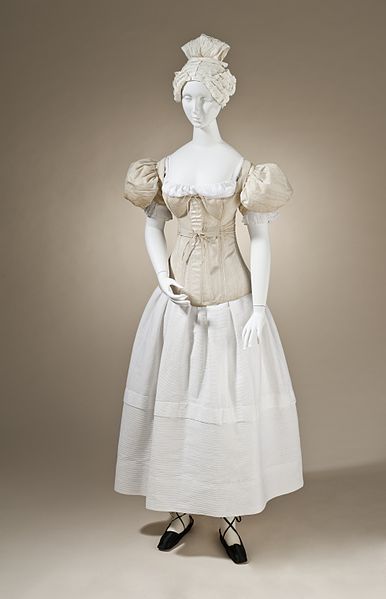
I signed up for a quarter Cannonball (13 books) with my online community, but I’ve completed it and I’m working on my half Cannonball (speaking of cannonballs, my behind is one), and, not wanting to let the 79 works I’ve read in this genre since February go to waste, I now return to Loretta Chase, who, while not my favourite romance novelist, is extremely reliable and entertaining. I’ve chosen Silk Is for Seduction because it’s about romance and fashion, specifically 1830s clothing which is particularly ridiculous. Look at what the fashionable wore under their clothing, and keep in mind that a shift, drawers, and more petticoats would be added, and that those things on her shoulders would be like wearing down pillows –

Once fully dressed, she might look like this:

Isn’t the thumbnail hideous? I dare you to click on it.

Have you stopped laughing yet?

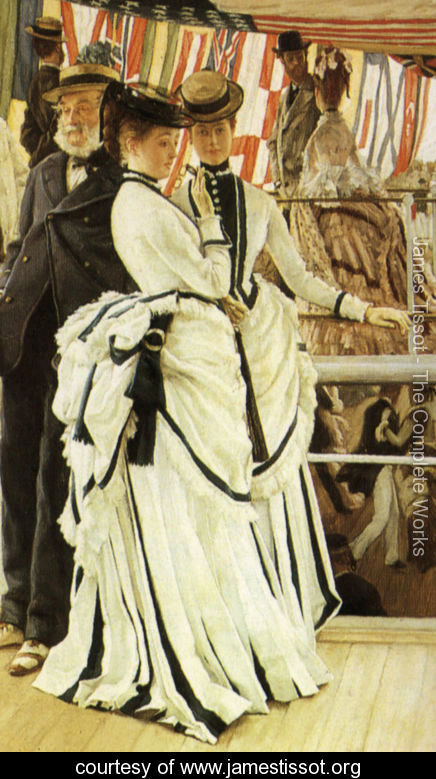
Now, you would not know it to look at me, but I really like fashion, past and present. My interest in period clothing has led to the purchase of coffee table books, museum visits, and hours of trawling the internet for drawings, extant clothing, recreations (huge subculture), and I have a lovely memory of cooing through drawers of lace samples at the Victoria and Albert museum with the Dowager Julien. These efforts have resulted in a reasonably decent overview of 19th century dress styles by decade. My favourite era is the 1870s, famous for its bustles. Can you blame me? I mean, Sweet Fancy Moses, I nigh on swoon when I look at this kind of dress –

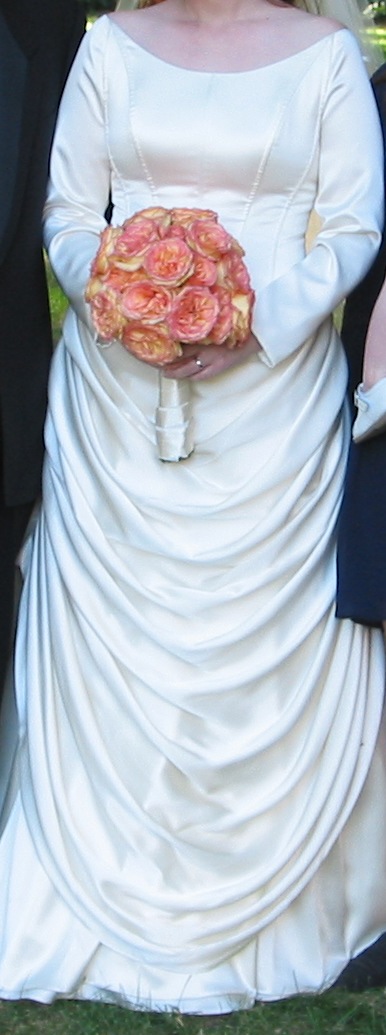
How could I not? It is all that is beautiful and good. So beautiful and good, that when it came to my wedding dress, I unconsciously chose this kind of style even though I hadn’t started learning about specific eras yet. To wit –

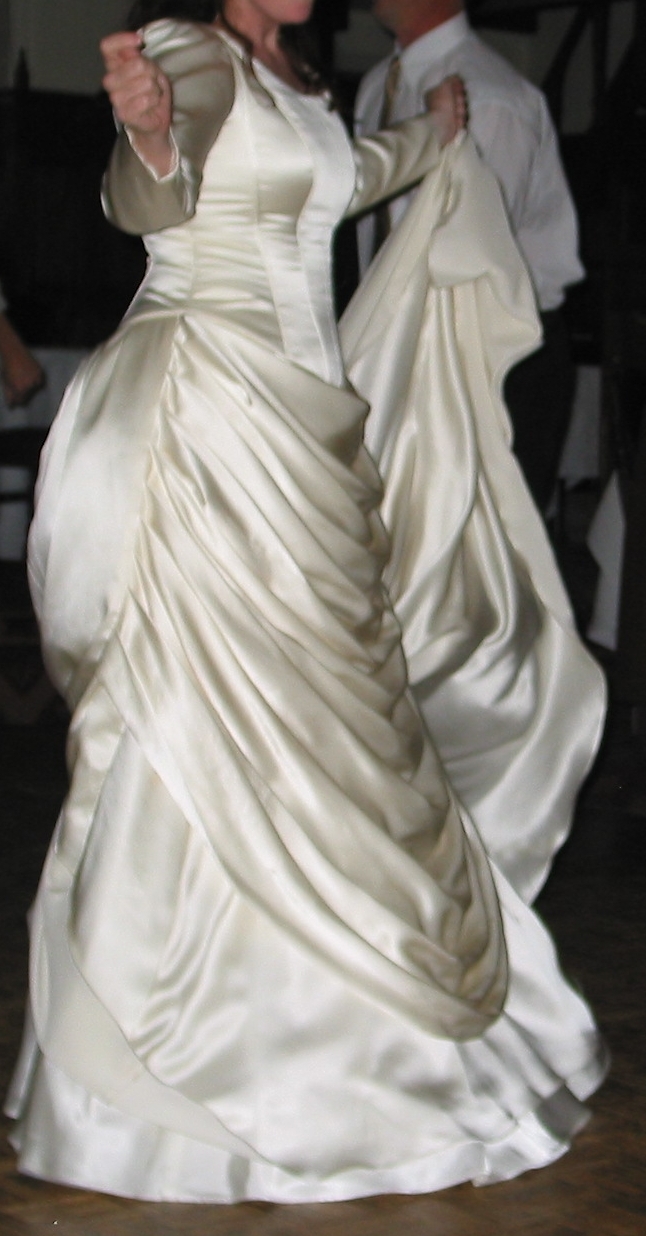
I know, I know the overskirt is too long! It mocks me in the photos. That is not a bustle, by the way, it is the aforementioned cannonball. These days, it’s an entire armory.

Loretta Chase’s Dressmakers Series features the three Noirot sisters who work as modistes. In contemporary language they would be couturiers, but since Frederick Worth hasn’t quite blazed his trail yet that term is not used. Marcelline, the oldest and the designer, is featured in the first book, Silk Is for Seduction; Sophy, the saleswoman, is featured in book two, Scandal Wears Satin; and Leonie, the money manager, will be the heroine of the third book, as yet unnamed, but let’s go with Velvet Is for Viscounts. They are “in trade”, but come from a shady upper class background. Their work requires them to rub shoulders and cultivate relationships with the aristocracy and wealthy gentry. They seek a young, beautiful aristocrat to dress and enhance their reputation and set their sights on Lady Clara Longmore who is the almost fiancée of the Duke of Clevedon. (His first name is given as Gervase, but in keeping with the era, he is referred to as anything other than “Clevedon” only once). Marcelline approaches His Grace in hopes of winning his lady’s patronage for her shop. From there, it all goes as one would expect from the genre. Poor Lady Clara, there are two books published so far and she gets a fuzzy lollipop in both. I hope Chase takes proper care of her in the next book.

The women’s clothing is an important element in historical romance novels. The men’s clothingalways skirts around any effeteness that would be consistent with the era and is plain and elegant. With main characters who are dressmakers, Chase spends a great deal more time than usual describing and talking about clothing. She either did a lot of research or is very good at making up words. Of particular enjoyment in both Marcelline and Sophy’s books is the acknowledgement of the extremely complicated nature of a woman’s toilette. Some romance authors simply ignore these details and with a quick pull of a few buttons the heroine is fully disrobed. Julia Quinn, who writes charming, funny, and mostly chaste novels, often has the heroine wearing ONLY the dress and it annoys me every time the hero unfastens a row of buttons and BOOM! she’s naked. I wear more cannonball management layers than that and it’s 2012. Any 19th century man trying to get to the good stuff would have to get through gloves, the dress, layers of petticoats, maybe crinolines, corset, drawers, shift, shoes, garters and hose, and possibly the “sleeve plumpers” seen above, plus any outerwear, bonnet or head covering, not to mention a potential Gordian knot of a coiffure (H/T Courtney Milan). These layers could have hooks, pins, myriad buttons, and/or lacings. It was like penetrating an Eastern Bloc bureaucracy to get all the way to the woman herself. Loretta Chase includes all these details and plays them for laughs and practicality. As fashion purveyors, the Noirot sisters’ clothing is especially complicated. Marcelline actually stops Clevedon from trying to undress her at one point because they simply don’t have time. Still, these are romance novels, so the men are very experienced and at some point the heroine can’t help but notice how adept he is with her assorted fastenings and adjustments.

Loretta Chase is one of the big names in romance for good reason. Lovely banter. Good at the smolder. Her Lord of Scoundrels is considered a classic of the genre and I’ve been working my way through her collection as my favourite writer, Lisa Kleypas, has moved on to writing exclusively hardcover contemporary romance. (It’s more profitable.) I will read “Velvet Is for Viscounts” when it comes out and until then I have books I return to again and again to re-read the “good bits” which sometimes means exactly what you think it does, and also really does not mean that at all.

Other reviews can be found on my list of books by author or The (Shameful) Tally 2014 which includes recommendations and author commentary.

Thank you Malin for recommending this book.

Lord of Scoundrels by Loretta Chase

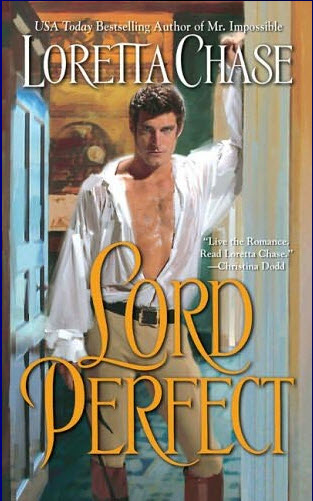
I am including this review for one reason only. Look at him:

I know it’s discomfiting, but do it for me. Note the manly open shirt, the manly sheen on his chest, the manly Coty cologne advertisement feathered hair and sideburns. The insolence. The seduction. The riding crop. The smolder. It’s not the book I’m reviewing, but Lord of Scoundrels is by the same author, and its cover is boring and staid. How could it not be in comparison to this wheel of Gouda? Not that Lord Perfect isn’t completely acceptable, it’s just that Lord of Scoundrels is a classic. It has a much deserved Amazon rating of 4 1/2 stars after 284 reviews. If I am embracing the historial romance genre, this book needs to be included as one of the ultimate romance novels: larger than life characters, operatic kisses in the rain, a battle of wills and, most of all, fun. It is thisclosetocamp, probablycloser, and the result is a delicious wet kiss of a book.

Our hero, full name Sebastian Ballister, Marquess of Dain, is 6’6″, black hair, black eyes, big nose, all man. Wealthy, arrogant, and clever, he meets his match in Jessica Trent, a pert, patient (she’ll need it), self-possessed spinster who has come to Paris to retrieve her gormless brother from the demi-monde Dain inhabits. He takes one look at Jessica and wants to lick her from head to toe. She takes one look at Dain and wants to rip all his clothes off. LET THE GAMES BEGIN! It’s beauty and the beast meets reformed rakes make the best husbands meets tortured hero, with a side of moustache twirling by minor characters trying to ruin everyone’s day. From Paris, the book moves to Dain’s ancestral home with machinations about a Russian icon and an illegitimate child, and an intense romance long on passion and blessedly short on maudlin.

Loretta Chase is, above all, an engaging and confident romance writer. She sets the scene deftly and excels at creating entertaining characters. If you like a touch of intrigue with your romance, she’s your gal. There will be chases, treasures and grand adventures. If you’re like me, you will revel in it despite the B story that does go on a bit. I find myself glossing over those parts hoping I don’t miss any major plot points. Truth be told, I can never tell if the subplot issue is with me (Why aren’t they kissing or bantering? When will they get back to the kissing and bantering? I DEMAND KISSING AND BANTERING!) or with the stories themselves, and I really don’t care.

Links to my other reviews can be found on my complete reading list of books sorted by author or Author Commentary & The Tallies Shameful.

The Pennyroyal Green Series: What I Did for a Duke by Julie Anne Long

I’m still reading historical romance novels and I keep a list of them as though tracking such things makes it any less ignoble. I call it The Shameful Tally. I also track the heroes’ names (Alex and Sebastian being the most popular), and the books so awful that I gave up on them.

What I Did for a Duke is from Julie Anne Long’s “Pennyroyal Green” series about the Redmond and Eversea families. She has set herself up quite nicely for a large group of interconnected novels as is a standard practice in this genre. It gives the reader a chance to revisit their favourite characters and is something I particularly like; so much so that I must confess, I have even bought a book only because I knew I’d get to see “Sebastian and Evie” (Lisa Kleypas The Devil in Winter) again. I adore them. I will buy any book they are in. Publishers are smart and I am easily led. From this Julie Anne Long series, I’ve also read How the Marquess Was Won. That book was so good, so good, oh Sweet Fancy Moses that is romantic, wait, is this high school?, oh, now, it’s all fallen apart, RATS! By the way, if you think these titles are bad, Long has a book called I Kissed an Earl that is waiting for me on my Kindle. As if the cover art weren’t embarrassing enough, these titles add insult to ignominy.

I’ve sampled about 2 dozen writers and you’ve got to give a writer credit where it is due: If you can pull off an almost 20 year age difference and make it not only palatable but irrelevant, you are on the right track. What I Did for a Duke pairs 20 year old Genevieve Eversea with “almost forty” (a phrase often and lovingly repeated) Alex Moncrieffe, Duke of Falconbridge. He is a widower out for revenge against Genevieve’s brother, Ian, for attempting to bed the Duke’s fiancée. Over the course of a house party, Alex sets out to seduce and leave Genevieve, but, pleasantly enough, the revenge plot is called off when this young woman figures it out, and is far lovelier and more attractive than Alex had anticipated. She’s bright and banters well. He’s charming and kind of autocratic. Tra la la. They get married. YAY!

There is nothing new here which is good because I am not looking for anything new, just fresh. It’s nice to see a standard revenge plot dismantled, but the real reason that this book works is simple: Julie Anne Long is very funny and she writes great smolder. That’s all it takes really; in fact, if you can pull off the funny, you don’t necessarily need the smolder, and, yes, she is that funny. [There was more here, but I’ve redacted the original pointlessly scathing review details.]

Edited April 17, 2013: I now consider Julie Anne Long one of the best romance writers currently publishing. Lisa Kleypas really skewed the curve for a while there when I was starting out with this phase. I bought this book as well as almost everything else Long has published, and she is on my autobuy list.

Edited October 1, 2013: What a bitchy review. So bitchy, this is the second time I have edited something that only I will see. What I Did for a Duke is a CLASSIC and I couldn’t see it at the time. The hero, Alex, is in the pantheon of great heroes. There are some issues with the structure, but the fact  is that in addition to the overall charm, humour, and delicious smolder, there is a two or three chapter section in the middle of the book that is simply magnificent. It features the hero and heroine having the kind of conversation that people falling in love have. The dialogue is honest and beautifully written, but what truly elevates it is the silences. There are long pauses during which the characters think and the reader follows their emotions to their conclusion. It’s just superlative and because it, and the rest of the book, are true to the emotional lives of the characters, Long accomplishes what every romance writer sets out to do.

A complete summary of Julie Anne Long’s catalogue, with recommendations, can be found here. Links to my other reviews can be found on my complete reading list of books sorted by author or Author Commentary & The Tallies Shameful.

The Bridgertons Series: The Duke and I by Julia Quinn

Let’s start with a visual, shall we? After all, it is a romance novel and book cover art can be so dull.

The Duke and I is the first novel in Julia Quinn’s Bridgerton family series. It features Daphne Bridgerton, a young woman in her second season “out”, and Simon, Duke of Hastings, the erstwhile best friend of her brother, Anthony. Simon has been away for 6 years waiting for his father, a complete bastard, to die. He has returned to London to inherit his title and in doing so both accept and reject, as far as he is able, his role in life. Simon attends a soiree at the home of (recurring character) Lady Danbury and runs into Daphne as she tries to quash her only suitor’s advances. Daphne has not had luck with beaux. Men only see her as a friend because, rather than a fashionable flibbertigibbet, she is lovely, grounded, and kind. Now, who would want that? Guess. Simon is attracted to her instantly, but realising she is his best friend’s sister, errs on the side of propriety and backs off. The Fates and Plot Points intervene and the two of them settle into a friendship based on London society’s perception of their affection for each other: He escorts her to balls to deflect the unwanted attentions of marriage-minded women and to simultaneously make Daphne seem more appealing to suitable men by association with him. It works, but of course they fall in love, and, of course, there are obstacles, specifically Simon’s reluctance to marry and carry on his family name. The moment he gives in to his feelings for Daphne, they are caught in a compromising situation and the dance toward the happy ending is set in motion as, of course, they must marry…

While it would seem that I read the best of the Bridgerton, series first, I really enjoyed The Duke and I. Julia Quinn is especially good at the banter I look for in these books and she also manages to create a sense of anticipation in a story with a pre-determined ending. That is no small feat. This novel also had the added advantage of characters having genuine conversations. It doesn’t seem like a lot to ask for, but often romance novel interactions consist of projecting personality factoids at each other and waiting to kiss. Quinn creates believable people; they are beautiful, rich and charming, but at least they seem real enough to let you care about them. Lastly, Quinn is by far the best author I have found for balancing the love and sex elements.

A Bridgerton series summary is included in my review of Gregory’s book On the Way to the Wedding.

Reviewer’s Note:

I’ve read 20 historical romance novels in the past month and I have to ask –

What is with all of the French kissing? As God as my witness, last weekend, I read a kissing description in which the hero licked the roof of the heroine’s mouth. Is that even possible? Was he Gene Simmons? Is that an image you want in your head reading one of these books? Let me answer that for you: No, it is not. Do you remember when you discovered kissing, or, better still, kissed someone you were so smitten with that it was heady, electric, devastatingly swoony, and so many other delightful things? Remember those kisses? These books need more of that. In romance novels, the men are experienced, but the woman are certainly unaccustomed to being kissed. So imagine yourself as an inexperienced and, no doubt, uninformed young woman. You are being kissed by this man, this beautiful man. How much tongue is involved? How quickly? Is he flossing your uvula? These writers use tongue calisthenics to show the intensity of the leads’ connection, but don’t necessarily capture that magical kiss feeling. The racier the novel, the more violent, thrusting (in a “primitive rhythm”), sweeping, possessive, and getting into every nook and cranny of her mouth his tongue gets. There must be a way to describe kissing that is romantic, passionate and erotic, and doesn’t slide into inept erotica.

A summary of Julia Quinn’s catalogue can be found here. Links to my other reviews can be found on my complete reading list of books sorted by author or Author Commentary & The Tallies Shameful.

The Bridgertons Series: An Offer From a Gentleman by Julia Quinn

As my ignominious devouring of romance novels continues and I present another one for review, I must start by making sure everyone bothering to read this is on the same page: There are two basic types of heroes in these books a) Laconic Warrior (usually a Laird or Cowboy) and b) Reformed Rakes Make the Best Husbands (titled and/or rich charming rake) as detailed in my first review. I prefer the Rakes by a mile. The books below are what I have read recently; I’m not counting them in my CBR total, but this is what I have been up (sunk) to:

Ransom – Julie Garwood – Laconic Warrior – predictable Garwood (which is not a bad thing, she’s reliable)
Honour’s Splendour – Julie Garwood – Laconic Warrior predictable Garwood
Prince Charming – Julie Garwood – Laconic Warrior, sub par Garwood
The Bride – Julie Garwood – Laconic Warrior – predictable Garwood
Once and Always – Judith McNaught – Reformed Rakes Make the Best Husbands. Charming Cynical Bastard. Gorgeous Bastard. Asshole. Rapist.
Temptation and Surrender – Stephanie Laurens – Surprisingly graphic, thisclosetosmut, occasionally hot, but not romantic
An Ideal Bride – Stephanie Laurens – Surprisingly graphic: 20 page sex scenes, really? Nervous virgins do things like that? Really?
The Heir – Joanna Lindsey – Tepid, underwritten, and dull.

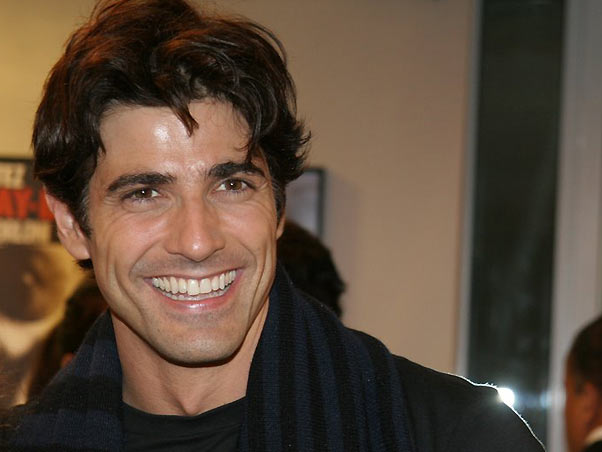
Oh, but then Amazon helped me discover Julia Quinn. She knows her way around a Reformed Rake, although, truthfully, they are more experienced charmers than genuinely rakish. I so don’t care. As is common with romance writers, Quinn created a series of books built around a family group, in this case the 8 Bridgerton children. Each is given their own book and, according to Amazon, the quality diminishes as one progresses through them. Last Friday, I picked up An Offer from a Gentleman (Bridgerton Family #3) about Benedict, and Romancing Mr. Bridgerton (Bridgerton Family #4) featuring Colin. I’d finished both of them by Saturday night. All of the family are described as having chestnut hair and wide mouths, and, although their eye colour varies, I choose to picture the men as all looking like a variation of this (but English and during the Regency):

I’ll give you a moment to collect yourself.

Now THESE are romance novels. Not the overwrought conflagration of sex scenes of Stephanie Laurens wherein everyone is on fire and ends up in the stars, or the tepid high school insufficiencies of Joanna Lindsey. Julia Quinn gets it right: There are no dramatic subplots just to fill pages; the writing is funny; the relationships are romantic; and there is playful banter. Oh, how I love the banter. The men are extremely attractive, and the women, well, the women are of the Wallflower/Why Didn’t Anyone Notice Me Sooner? variety. As a woman who never garnered much male attention, I relate to this type quite well because, in the real world, people don’t actually find it enchanting when you talk like a Gilmore Girl by way of Katharine Hepburn. Anyway, in An Offer from a Gentleman , Benedict (son #2) first meets Sophie Beckett (abused bastard daughter of the late Earl of Penwood) at a masked ball her stepmother has forbidden her to attend. She has to leave quickly and he doesn’t even find out her name.  Left with only the mystery woman’s glove, Benedict spends months looking for, and dreaming of, the woman he met. Mercifully, the description of those months lasts just a couple of pages. Meanwhile, Sophie is a little busier as she is cast out of her home and must find work as a servant. Their paths cross again two years later when Benedict saves her from being attacked and then, conveniently, falls ill and she stays with him. All of these books contain these contrivances and, again, I so don’t care. They fall for each other all over again, but she will not reveal they have met before, and he cannot marry a woman of her station/origins. In between the meeting and the marrying, the reader gets delightful interplay between the characters, genuinely romantic descriptions of how they feel about one another, and some well-written love scenes (although at least one more would have been nice). This book was exactly what I was looking for. I may even have taken a reading break to run into the living room to yell at Mr. Julien, “OH MY GOD! I LOVE THIS BOOK!”

I have ordered Julia Quinn’s Bridgerton books 1 and 2 (Daphne, then Anthony) used from Amazon. If I’m going to read this stuff, the least I can do is only pay 1 cent, plus shipping, for it. Next up after Quinn is Lisa Kleypas’ The Devil in Winter. I’ve decided not to review any more of these books, but I can tell you that the Devil excerpts I’ve read on Amazon held the promise a genuine rakehell at last. (2019 Update: HA! HA! HA!)

A summary of Julia Quinn’s catalogue can be found here. Links to my other reviews can be found on my complete reading list of books sorted by author or Author Commentary & The Tallies Shameful.